
- by Todd Benadum
- December 9, 2025
- Dry Type Transformers, Padmount Transformers
Many businesses and organizations take transformers for granted until a performance issue arises or they break down unexpectedly. Some maintenance teams only take action when a visible problem occurs, overlooking the day-to-day inspections that help identify minor issues before they worsen. These oversights create long-term vulnerabilities that a proper maintenance strategy can help eliminate.
The first step in protecting your facility’s transformers requires a basic understanding of the maintenance process and its importance. A practical and effective strategy can often be the difference between decades of reliable, efficient operation and a sudden failure.
Why Transformer Maintenance Matters
A single transformer failure can shut down an entire production line, and the financial impact extends far beyond the costs of equipment repair or replacement. Depending on the industry and production levels, manufacturing facilities can lose between $500,000 and $5 million per hour during unplanned outages. These costs add up quickly when you factor in lost products, missed deadlines, overtime pay for repair crews and potential penalties from customers who don’t receive their orders on time.
Additionally, safety risks increase when facilities do not maintain their transformers properly. Overheating units can cause fires, electrical arcs can injure workers, and oil leaks in padmount transformers create environmental hazards that trigger expensive cleanup efforts and regulatory fines. Scheduled maintenance catches many of these problems before they become emergencies, protecting your employees and your company’s bottom line.
More importantly, your facility’s operational efficiency affects your organization’s reputation with customers, suppliers and the public. Without consistent power delivery and uptime, your customers may seek a more dependable partner elsewhere.
Industrial Challenges When Operating Transformers
Environmental factors are among the most significant challenges for transformer maintenance personnel. Without proper ventilation around dry type transformers, extreme temperatures, dust and moisture from the outside threaten a unit’s critical components. Additionally, transformers in chemical plants and manufacturing facilities are often exposed to corrosive substances that can accelerate wear and tear on insulation and windings.
Older transformers create additional challenges. Many industrial units were installed decades ago, when maintenance strategies were different and finding replacement parts could take weeks or months. Documentation for these legacy systems is often incomplete or missing entirely, making troubleshooting more difficult than it should be.
Finding qualified staff to perform maintenance can also be problematic. Experienced electricians and repair technicians are retiring at a faster rate than new workers can be trained, resulting in many facilities being understaffed. Budget constraints also force some companies to stretch their resources, often pushing routine inspections and minor repairs to the back burner until a major problem arises.
How Transformer Maintenance Increases Longevity in Industrial Operations
Regular inspections catch problems early, including loose connections that create heat buildup, insulation degradation that leads to shorts, and cooling system problems that cause overheating. These routine checks can sometimes add decades to a transformer’s useful life compared to units that only receive attention when they break down.
Technicians must clear dust and debris from blocked cooling vents to prevent hot spots that can damage windings over time. Additionally, fan motors for dry types and cooling fins or radiators for padmounts need regular checks and proper attention to ensure proper airflow and fluid circulation. Without this basic maintenance, even the highest-quality transformers can fail prematurely.
Transformer Turns Ratio (TTR) testing and dielectric absorption tests (DAT) help assess the electrical integrity and insulation condition of a dry type transformer. Dissolved gas analysis (DGA) can show early warning signs of internal problems on oil filled padmount units. These tests reveal overheating, arcing and sparking, partial discharge, mechanical stress, and insulation degradation. Planning transformer maintenance decreases downtime in industrial operations compared to waiting for emergency failures.
Preventive Maintenance Benefits
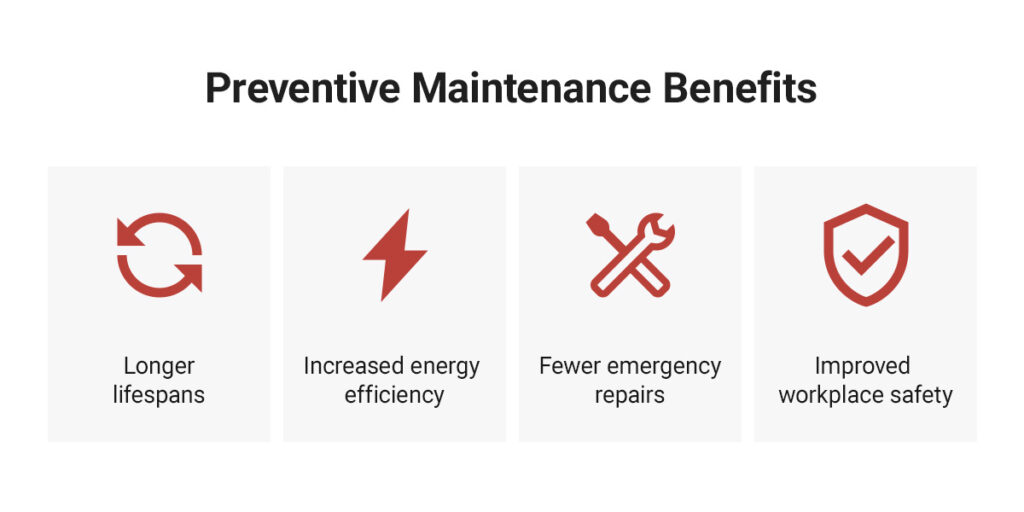
An effective transformer maintenance strategy delivers measurable results over time that justify the small upfront costs. Several primary benefits include:
- Longer lifespans: Regular care helps transformers reach their full design life — sometimes beyond 35 years — rather than failing in half that time due to neglect. The increased service life means fewer replacement costs and less disruption to your operation.
- Increased energy efficiency: Clean, well-maintained transformers waste less energy as heat, leading to lower monthly power bills. Even minor improvements in efficiency can save thousands of dollars annually in larger facilities.
- Fewer emergency repairs: Catching problems early means you can fix them during a planned shutdown rather than scrambling for parts and service during a crisis. Emergency repairs cost significantly more than the time, labor and materials for scheduled maintenance.
- Improved workplace safety: Regular inspections identify potential problems before they can cause fires, explosions and electrical hazards. Cleaning and testing address issues like loose connections, corrosion, overheating, arcing and insulation degradation before they escalate.
Leveraging Advanced Technology in Transformer Maintenance
Today’s technology helps eliminate the guesswork of transformer maintenance by providing real-time information about the unit’s health and condition. These technologies allow personnel to identify problems early and base their maintenance schedules on actual conditions instead of random time intervals.
Temperature monitoring is one of the most beneficial processes for transformer protection. Key components of these systems include:
- Smart temperature sensors: Thermocouples placed near hot spots in each coil provide continuous temperature readings and automatically trigger cooling fans when needed. This capability helps prevent damage from overheating while reducing unnecessary fan operation that wastes energy.
- SCADA integration: Connecting temperature sensors to a Supervisory Control and Data Acquisition (SCADA) system enables maintenance teams to track trends and receive alerts from anywhere within your facility. The historical data helps predict when you will need to service your equipment before problems develop.
- Protection relays: These relays can automatically shut down a transformer, activate alarms or send notifications to maintenance staff when temperatures exceed safe operating limits. This ability prevents catastrophic failures that could destroy the entire unit.
These monitoring systems work best when combined with high-quality transformer construction. ELSCO Transformers utilizes 100% copper windings and premium-grade insulation materials to provide enhanced electrical efficiency and a longer lifespan. Biodegradable natural ester fluid options for our padmount units reduce environmental risks while maintaining excellent cooling performance.
How ELSCO Can Help Decrease Transformer Downtime in Your Industrial Operation
At ELSCO Transformers, we build high-quality units with maintenance in mind, using handcrafted construction techniques that create more reliable equipment from the outset. Our customization options address specific maintenance challenges across various applications and industries.
Our fast shipping capabilities minimize downtime during emergency replacements, while our plug-and-play transformer retrofits reduce installation times and costs. We also perform a comprehensive range of repairs for medium-voltage transformers, and we offer reconditioned or remanufactured units that operate like new.
ELSCO engineers can provide technical support to help your maintenance team develop effective care programs tailored to your specific equipment and operating conditions. We prioritize superior service and long-term partnerships in everything we do, regardless of the size or scope of your business.
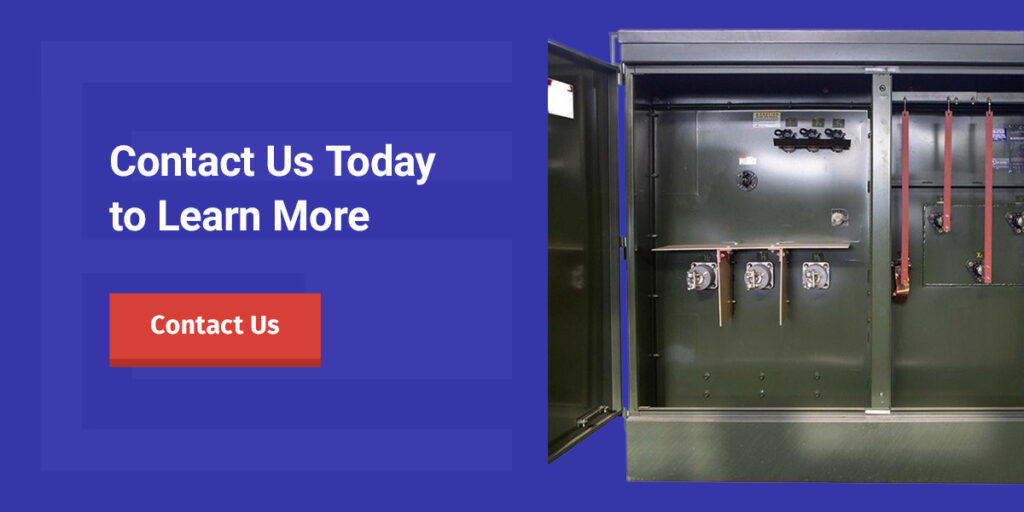
Contact Us Today to Learn More
Don’t wait for a transformer failure to shut down your operation entirely. Our team can help you develop a maintenance strategy or recommend improvements to keep your facility running smoothly and efficiently. Contact us today to discuss your specific needs or to request a quote on a new unit.