

- by Todd Benadum
- March 9, 2026
- Transformer Retrofits, Transformer Services
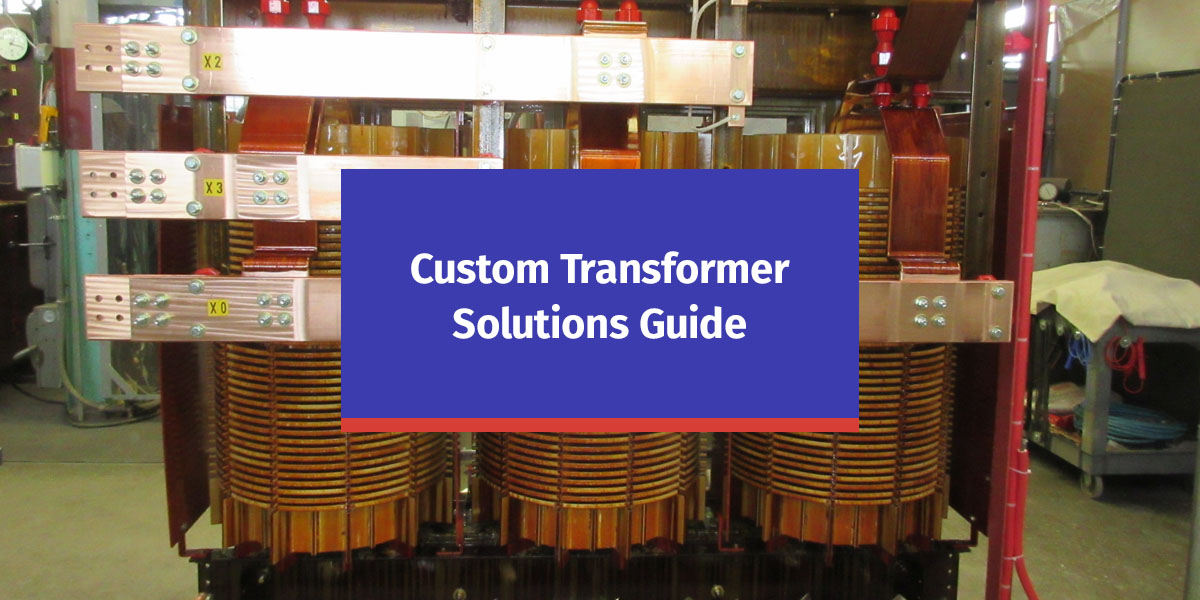
Every facility operates with a unique electrical setup. To properly convert utility voltage for your equipment, your transformers must align perfectly with your existing connection points, mounting arrangements and bus work configurations. However, standard catalog units without any modifications rarely provide this perfect fit.
Customization solves the problem. A supplier can design a new transformer or retrofit a stock unit to fit your infrastructure rather than forcing you to rework breakers, cable runs and mounting configurations. You reduce installation costs, minimize downtime and keep your existing electrical system intact.
Understanding when customization makes sense and what suppliers need to engineer the right fit helps you make faster, more cost-effective decisions. This guide covers the situations ideal for customization, the two main approaches to custom transformers and the technical specifications suppliers need to deliver plug-and-play installations.
When Standard Transformers Fall Short
Space constraints often prevent a stock transformer from fitting your installation location. You may have limited floor space, low ceilings or obstructions that block the installation of a typical unit. These physical limitations require a transformer that fits the available space while still delivering the capacity you need.
Replacing an obsolete dry type or padmount transformer creates a different problem. Manufacturers regularly discontinue models, leaving you without a direct replacement. Your existing busbars, breaker panels and cable entry points were built for a specific configuration that suppliers may no longer offer.
Voltage requirements present another challenge. Your facility may need special voltage ratios that only custom designs or modified units provide. Some stock transformers have only five taps, which limits your ability to dial in the exact output voltage needed to prevent equipment damage or performance issues.
Emergency failures create the most urgent situations. Modifying your electrical system to accommodate a standard unit significantly increases downtime. Waiting months for fully custom builds is not realistic when you’re losing revenue every day.
Customization Options
Customization can involve either designing a new transformer from scratch or retrofitting a stock unit. Suppliers typically use one of two strategies that comply with industry standards, including:
Custom-Built Transformers
Manufacturers design custom-built transformers from the ground up to your exact specifications. Engineers calculate winding configurations, select core materials and build enclosures specifically for your application. This process is ideal for truly unique needs that no stock transformer can handle, such as unusual voltage ratios, specialized cooling systems or extreme environmental conditions.
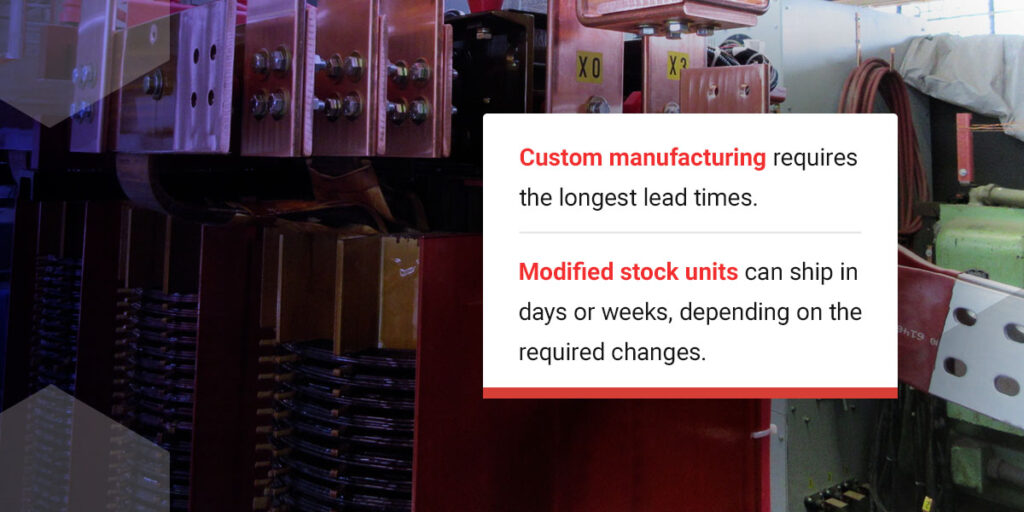
Custom manufacturing requires the longest lead times since suppliers must design, fabricate and test every component before shipment. For planned facility expansions or applications requiring specifications beyond standard offerings, custom-built transformers deliver the exact solution your operation demands.
Retrofit Stock Units
Retrofitting starts with an in-stock transformer that closely matches your electrical needs. The supplier modifies it by customizing the busbars, adjusting taps and reconfiguring connection points to fit your setup.
Modified stock units can leave the facility within days or weeks instead of months, depending on what modifications need to be made. For emergency replacements and projects with urgent timelines, retrofitting offers a practical solution when stock units match your core specifications.
The Importance of Custom Bus Work in Plug-and-Play Installation
Retrofitting involves more than finding a transformer with the correct electrical specifications. The physical connections between the transformer and your existing system determine how complex the installation becomes. Custom bus work is particularly critical for dry type transformer retrofits, where precise alignment of cables and busbars enables direct connection to your existing infrastructure.
Connection points differ across transformer models. Without engineered bus work, your installation crew must fabricate connections on-site to link the replacement transformer to your breakers, cables and distribution panels. Suppliers engineer busbar configurations that align with your existing connection points to eliminate this problem.
The following information helps suppliers engineer these connections accurately:
- Physical measurements: Measure the distance between the floor and the busbars to establish vertical positioning. Document distances between connection points, noting horizontal spacing for multi-phase connections. If the transformer is installed in an existing electrical room or cabinet, measure the enclosure dimensions as well.
- Connection configurations: Photograph your current transformer from multiple angles, capturing how cables enter the enclosure, where bus bars connect and how breakers integrate with the system. Include close-up shots of terminal arrangements and any specialized mounting hardware. Photos reveal details that drawings often miss, like cable bending radius requirements and clearance constraints around existing equipment.
- Electrical system specs: Document your breaker types, cable sizes and conduit configurations. Note whether you use top or bottom cable entry and identify any motor control centers or distribution panels that connect to the transformer. This information helps suppliers understand your system’s architecture and design connections that integrate seamlessly.
Evaluating Your Customization Options
Before committing to either approach, consider what matters most for your project. Timeline urgency, technical specifications and total costs all play a role in determining the best path forward.
- Timeline: Evaluate how quickly you need the replacement operational. Emergency failures require the fastest possible solution. Retrofitted stock units modified with custom bus work typically leave the supplier’s facility quickly, depending on the complexity of the modification.
- Technical requirements: Verify that available stock units provide the capacity, voltage and tap configurations your facility needs. Transformers operating beyond their rated capacity generate excessive heat that breaks down insulation and shortens service life. Confirm that the supplier’s stock catalog includes options that meet your specifications before committing to a retrofit.
- Budget: Consider the full project cost, not just the transformer price. While retrofit units with custom bus work may cost more than standard catalog transformers, they eliminate expensive infrastructure modifications at your facility. Factor in labor, potential downtime losses, and the cost of reworking breaker panels or building new enclosures.
How ELSCO Can Help
If you’re unsure which customization approach is best for your operation, the experts at ELSCO Transformers can walk you through the options. Our transformer catalog includes a wide selection of medium voltage dry type and oil-filled padmount units across multiple kVA ratings and voltage configurations. Our team evaluates your requirements, recommends the most effective solutions and handles the engineering from start to finish.
Choosing us means experiencing other benefits like:
- Full customization: Our engineers analyze the photos, measurements and drawings you provide to identify the best-suited transformer for your application. We then build high-voltage cables and low-voltage bus bars that align with your existing connection points.
- Fast delivery: Our modified transformers leave our facility within days or weeks, depending on the complexity of the modifications. Faster delivery helps reduce downtime during emergency replacements and minimize revenue losses from extended outages.
- Proven reliability: Our dry type transformers have had zero product failures since 1988 due to workmanship, quality, design or materials. Our units include nine taps for precise voltage control and nonflammable Nomex insulation for added safety and performance.
- Industry experience: For over a century, we have served customers across a wide range of industries, from large manufacturers and industrial facilities to utilities and power plants. Our five-year warranty on indoor dry type transformers exceeds the industry standard of one year.
Contact Us Today to Learn More About Our Custom Transformer Solutions
Don’t let a mismatched transformer create unnecessary downtime or costly changes to your existing setup. Our team can engineer a custom or retrofit solution designed for fast, plug-and-play installation. Call 800-232-9002 to request a quote or discuss your specifications.